Pest control in Southern Utah is really a game of timing. The bugs here run on a schedule set by the heat, and if you know which pests show up when, you can get ahead of them instead of reacting after they are already inside. Here is a month-by-month look at what is active around St. George and what to do about it. For the full story on our most famous summer visitor, see our guide to keeping scorpions out of the house, or jump straight to Tdooz pest control.
When are pests most active in Southern Utah?
Almost every pest here is cold-blooded, so activity rises and falls with temperature. Things are quiet in the cold of winter, ramp up through spring, and hit a peak in the heat of summer, with a second surge during monsoon season when rain pushes insects and scorpions toward homes. The chart below shows the general pattern for the pests St. George homeowners deal with most.
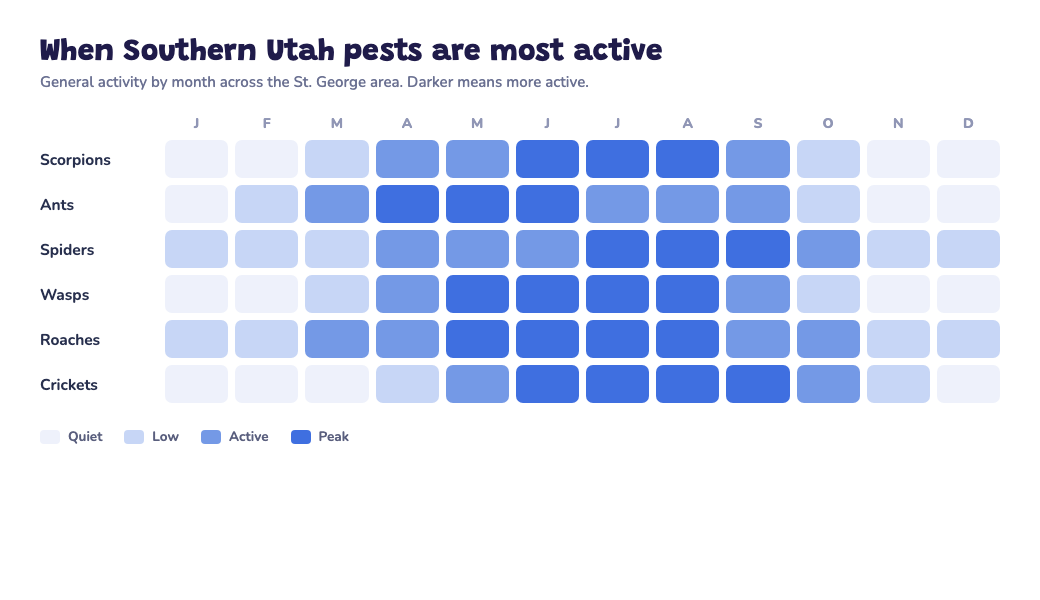
The takeaway is in the color. The window to get ahead of the season is late winter and early spring, before the darkest columns arrive. Treat then, and you keep the summer peak from ever building.
Spring (March to May)
As the ground warms, ants are usually first, streaming in to forage, followed by spiders, wasps starting their nests, and the first scorpions of the year. Spring is the best time to lay down an exterior barrier, because knocking back the early population is what keeps summer from exploding.
Summer (June to August)
This is peak season. Scorpions, wasps, ants, roaches, and crickets are all at their most active in the heat, and scorpions in particular hunt hard after dark. Monsoon storms drive a noticeable spike, pushing pests out of the ground and toward the shade and moisture of your home. Consistency matters most right now, since a missed month lets the population rebound fast.
Fall (September to November)
As nights cool, spiders often peak while they hunt and mate, and many pests start looking for a warm place to wait out winter, which is when they try to move indoors. Sealing entry points in early fall, before that migration, pays off all winter long.
Winter (December to February)
Most outdoor activity goes quiet, but the pests that already made it inside, especially roaches and spiders, stay active in the warmth of the house. Winter is a good time for interior treatment and for sealing the gaps you spotted in the fall.
How do you stay ahead of the calendar?
The homeowners who never seem to have a pest problem are not spraying harder, they are spraying on schedule. A recurring exterior treatment timed to the seasons keeps the population from ever building to the point you notice it. With Tdooz pest control, a vetted local pro sets up that rhythm for you, and every pro is background checked, carries proof of insurance, and has been interviewed before joining the platform. Pricing is based on your lot size and whether you want a one-time visit or a recurring plan, shown as an exact, upfront price in the app with no surprise fees.